InvoicesCrafts
What are invoice payment terms?
Payment terms set expectations for the payment of a bill. They can cover the due date, accepted payment method and currency, deposits or installments, and any other conditions agreed for the work. Agree on them before work begins or an order is accepted, then make sure the invoice matches that agreement.
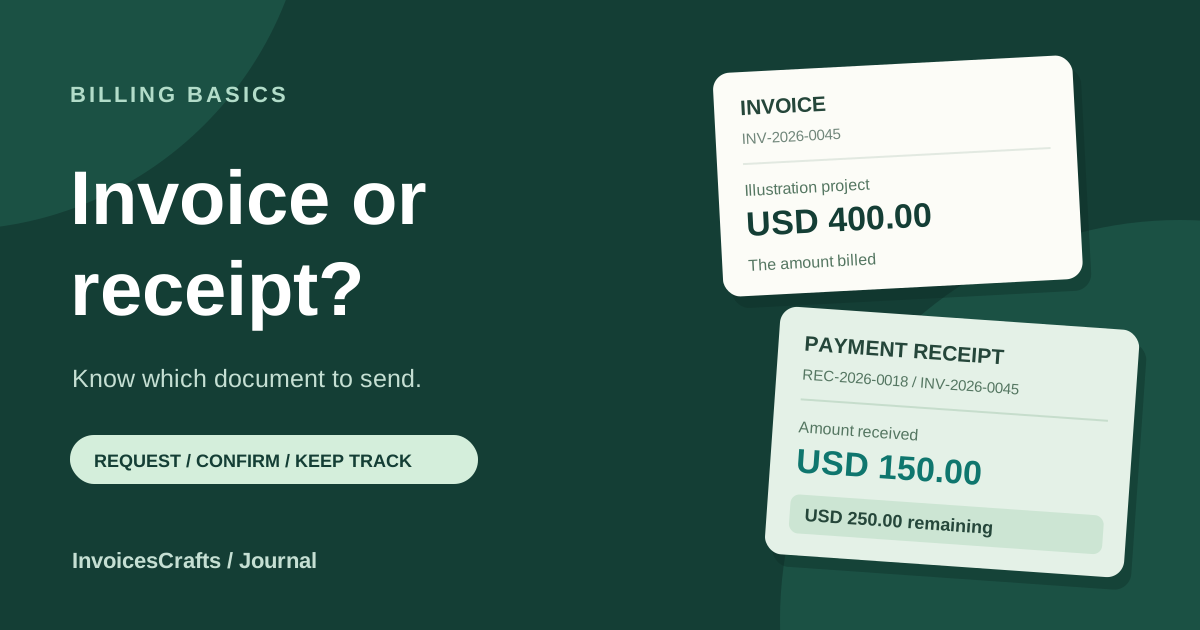
The invoice should make the amount currently due easy to find. If a deposit has already been received, show it separately from the total charge and check the remaining balance. Payment terms explain when that balance is due; they do not replace a clear itemized invoice.
Common invoice payment terms and what they mean
Due on receipt asks the client to pay when they receive the invoice. Because receipt and payment processing may take time, agree on a specific date if you need a precise deadline.
Net 7, Net 14 and Net 30 commonly mean the full amount is due 7, 14 or 30 calendar days after the invoice date. Some agreements use a different starting event, such as receipt or acceptance. Specify the trigger and date rather than assuming both parties interpret the shorthand in the same way.
A deposit or milestone schedule divides payment into agreed portions. For example, a project might require a deposit before work begins and the remaining balance after delivery. State the amount and due date for each installment, and identify any payment already received on the final invoice.
An early-payment discount can offer a reduced amount if payment is received by an agreed earlier date. Define the eligible amount, deadline and full balance due if the discount does not apply. Do not add a discount or late fee to an existing agreement without checking the terms and any applicable rules.
How to calculate a Net 30 due date
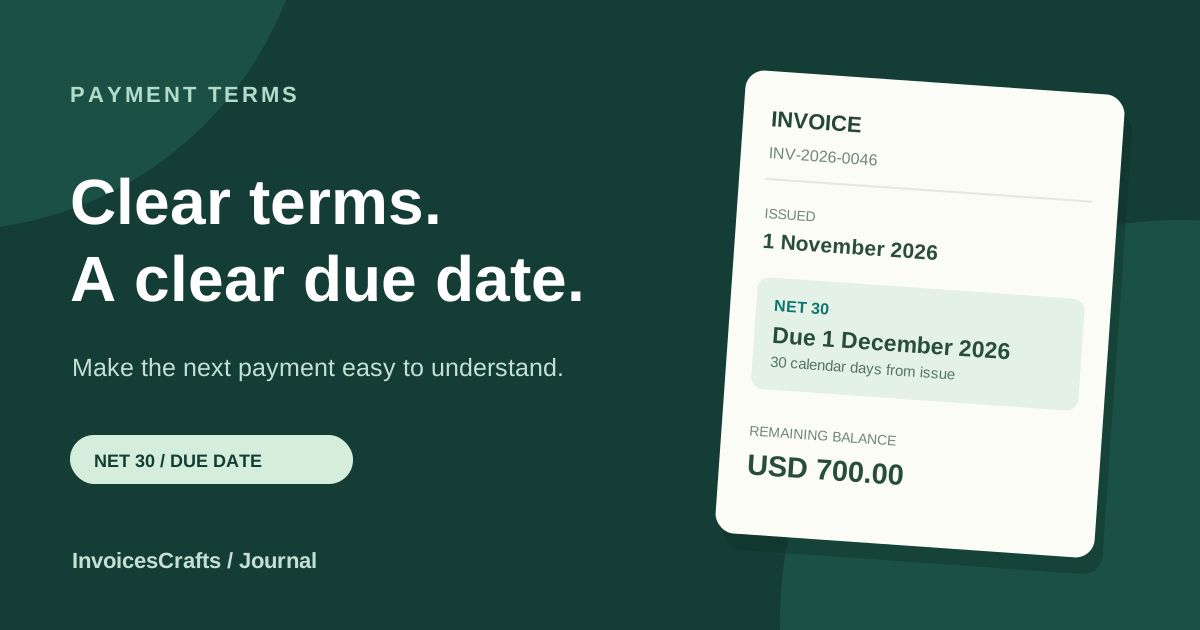
First confirm that the agreement uses 30 calendar days from the invoice issue date. Count forward 30 days after that date, including weekends and holidays unless the agreement says otherwise. For an invoice issued on 1 November 2026, this produces a due date of 1 December 2026.
Write both the term and the date, for example: Payment terms: Net 30 from invoice date. Due: 1 December 2026. If the agreement uses business days, a receipt date or a rule for weekends or holidays, follow that wording and calculate the date accordingly. Confirm any uncertainty with the client before sending.
How to choose terms for a freelancer or small business
Consider the size and length of the work, your cash flow and the customer's approval process. A short term may suit a small one-off job, while a larger project may need agreed milestones. Ask a new client's billing team whether it needs a purchase order, supplier setup or a specific submission address.
Put the agreed schedule in the quote or contract before issuing an invoice. If the customer proposes different terms, resolve the difference before work starts. Use the same dates and conditions on the invoice and in your email; an invoice alone should not be used to silently change an existing agreement.
How to write payment terms on an invoice
Include the issue date, a specific due date, amount and currency due, and the accepted payment method. Add the details needed to pay and ask the client to use the invoice number as a payment reference. For an international client, agree on the currency and who handles transfer fees before billing.
Example wording: Net 30 from the invoice date. The remaining balance of USD 700.00 is due on 1 December 2026 by bank transfer. Please include INV-2026-0046 as the payment reference. Replace the date, amount, method and reference with the details agreed for your own transaction.
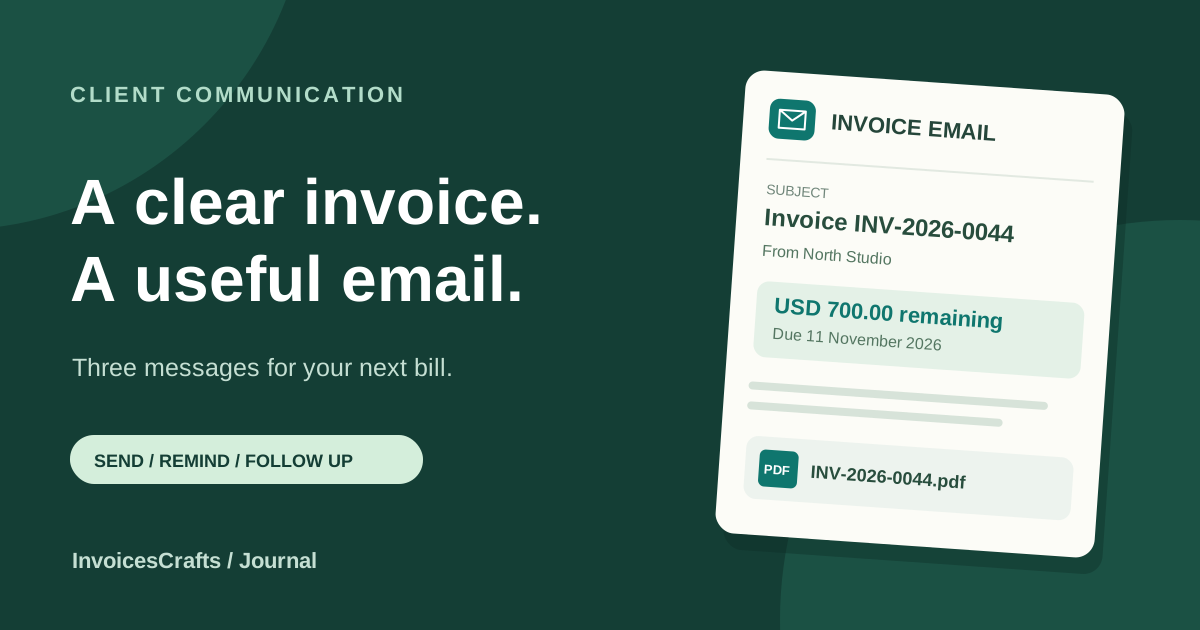
In InvoicesCrafts, enter the issue and due dates, add your payment instructions and review the preview. Use the print or PDF action to save the invoice, then open the file and check the dates, balance and payment details before sending it through your usual channel.
Payment terms checklist before sending
Read the invoice alongside the agreement and check that the client can tell exactly what to pay and when.
- Confirm the payment term and its starting event match the agreement.
- Calculate and display the exact due date, including any agreed weekend or holiday rule.
- Check the invoice total, payments already received and remaining balance in the agreed currency.
- Provide the agreed payment method and invoice reference.
- Include the customer's purchase-order or billing reference if needed.
- Review the saved PDF and send it to the agreed billing contact.
Worked example: a Net 30 invoice with a deposit
A fictional project uses Net 30 calendar days from the invoice date. The deposit has already been received; no tax or other adjustments apply in this example.
- Invoice number
- INV-2026-0046
- Issue date
- 1 November 2026
- Agreed term
- Net 30 calendar days from the invoice date
- Due date
- 1 December 2026
- Project total
- USD 900.00
- Deposit received
- USD 200.00
- Remaining balance due
- USD 900.00 − USD 200.00 = USD 700.00
- Payment reference
- INV-2026-0046
Common questions
What does Net 30 mean on an invoice?
Net 30 commonly means the full balance is due 30 calendar days after the invoice date. Check the agreement for the starting event and any special counting rules, and show the exact due date.
Does Net 30 include weekends?
When the agreed term is 30 calendar days, weekends and holidays are included. An agreement may use business days or specify a different rule for a due date that falls on a non-working day.
What is the difference between Net 30 and due on receipt?
Net 30 allows an agreed 30-day period before payment is due. Due on receipt asks for payment when the invoice is received. State an exact date to make the deadline clear.
Can I change payment terms after agreeing to a project?
Discuss any proposed change with the client and document the agreement before relying on new terms. Check the existing contract and applicable rules; do not assume adding a new term to an invoice changes the agreement.
Should an invoice show a deposit already paid?
Yes. Identify the deposit already received and show the remaining balance so the client can distinguish the total project charge from the amount still due.