InvoicesCrafts
What is a proforma invoice?
A proforma invoice describes a proposed transaction before the final billing document is issued. It can help a buyer review quantities, prices, currency and delivery or payment terms, or arrange an internal approval. Label it clearly as a proforma so it is not confused with the final invoice.
The amounts can change if the scope, quantities, shipping or other terms change before the transaction is finalized. Include a validity date if appropriate and agree on changes with the buyer. A proforma is generally not the final tax invoice; requirements for invoices and advance payments vary by jurisdiction.
Proforma invoice vs invoice: the key differences
Purpose: a proforma presents proposed charges and terms for review. A final invoice identifies the charges being billed and tells the customer what is due. Timing: a proforma is usually sent before the sale or work is finalized; a final invoice is issued at the billing point agreed for the transaction.
Amounts: a proforma can show estimated amounts, while the final invoice should reflect the actual agreed charges, applicable adjustments and payments already received. Numbering: use a clear reference for the proforma and a separate invoice number for the final document so the two are easy to trace.
Payment: a proforma can communicate an agreed advance-payment request, but do not assume it replaces the invoice or receipt required for that payment. Check the agreement and local invoicing rules, particularly where tax or cross-border shipments are involved.
When should you use each document?
Use a proforma when a buyer asks for a preliminary breakdown before approving a purchase, arranging payment or preparing for a shipment. For example, a supplier may describe expected goods, quantities and shipping terms before dispatch. Confirm any customs documentation requirements separately; a proforma does not automatically replace a commercial invoice.
Use a final invoice when the agreed billing point arrives. Depending on the contract, that might be a deposit, a milestone, delivery or completion. Check the applicable invoicing requirements and the client's submission process, and include the actual amount due and its due date.
What to include on a proforma invoice
Give the buyer enough information to review the proposed transaction and identify the document. Where relevant, describe delivery, origin and shipping terms accurately. Do not insert tax, shipping charges or a deadline without checking the applicable details and your agreement.
- A clear Proforma Invoice label, reference, issue date and validity date if applicable.
- Seller and buyer names and contact details.
- Descriptions, quantities, unit prices, currency and estimated total.
- Any applicable estimated taxes, shipping and other charges, identified clearly.
- Proposed payment and delivery terms, including an advance if agreed.
- Relevant shipping details and country of origin when needed for the transaction.
How to move from a proforma to a final invoice
Confirm the buyer's approval and record any changes to the proposed items or terms. When it is time to bill, create the appropriate final invoice with its own invoice number and the actual charges. Reference the proforma or purchase order if that helps the buyer match the documents.
Show any advance payment already received and calculate the outstanding balance. Include the agreed currency, payment instructions and exact due date, and check any tax details required in your jurisdiction. Keep the proforma, final invoice and payment records together; acknowledge a received payment with a receipt where appropriate.
InvoicesCrafts provides a proforma invoice template for preliminary details and a standard invoice template for final billing. Review each document and its saved PDF before sending it to the buyer.
Common mistakes to avoid
Avoid presenting an estimate as a final amount, reusing the same reference for two different documents, or overlooking a deposit when calculating the balance. If the buyer changes the order, confirm the revision rather than assuming the earlier proforma still describes the transaction.
A proforma is not proof that a customer has paid. Check your payment records and issue the appropriate receipt when payment is confirmed. For tax and customs treatment, use the rules and documents relevant to the particular jurisdiction and transaction.
Example: from a proforma to a final invoice
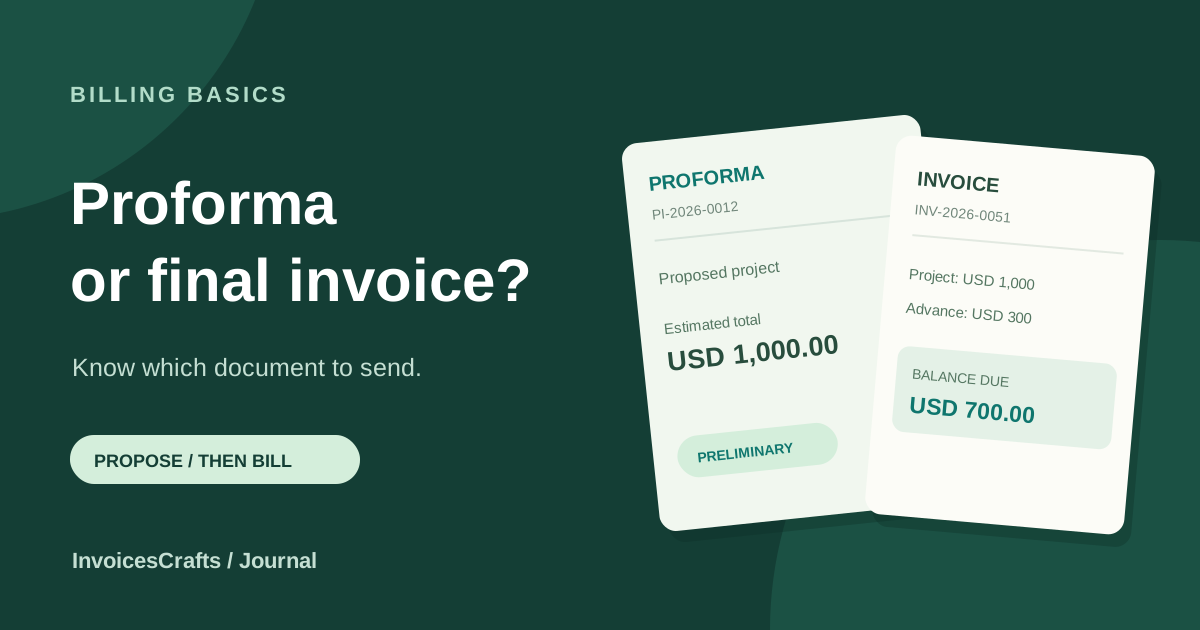
A fictional designer proposes a project in USD. The buyer approves the work, pays the agreed advance and the final scope remains unchanged. No tax or other charges apply in this example.
- Proforma reference
- PI-2026-0012
- Proposed project fee
- USD 1,000.00
- Agreed advance received
- USD 300.00
- Final invoice number
- INV-2026-0051
- Final project charge
- USD 1,000.00
- Remaining balance
- USD 1,000.00 − USD 300.00 = USD 700.00
- Final invoice due date
- As agreed with the buyer
Common questions
What is the difference between a proforma invoice and an invoice?
A proforma invoice presents proposed goods or services, prices and terms before final billing. A final invoice records the charges being billed and requests the amount due under the agreed terms.
Can a customer pay a proforma invoice?
A proforma can communicate an agreed advance-payment request. Confirm the agreement and local rules for the invoice and receipt documents required when an advance is paid.
Is a proforma invoice a tax invoice?
A proforma is generally a preliminary document rather than a final tax invoice. Requirements vary by jurisdiction, so check which document is required for the transaction and any advance payment.
Should a final invoice have the same number as the proforma?
Use separate, clearly identifiable references so the preliminary document and final invoice can be distinguished. Refer to the proforma on the final invoice if useful for matching the records.
Can the final invoice amount differ from the proforma?
It can if quantities, scope or other agreed charges change. Confirm changes with the buyer and ensure the final invoice reflects the actual agreed transaction and any payments already received.