InvoicesCrafts
Check where the first email actually went
Open the original message and check the recipient, attachment and any delivery-failure notice. Did you send it to the person who hired you, even though the company uses a separate accounts address? Was the PDF attached? A quick check here can save a second round of confusion.
Ask the client to confirm the right billing contact. Something as simple as 'Should I send this to you or directly to accounts?' gives them an easy way to explain their process. If they require a purchase order number or a supplier portal, get those details before resending.
Keep the original sent message. It gives you a record of what you submitted and when. You can refer to that date calmly without turning the reply into an argument about whose inbox is at fault.
Use the existing invoice number
If the invoice is correct, resend the same document with the same invoice number. Creating a new bill just because the email went missing can leave you and the customer tracking two references for one piece of work.
Before attaching it, open the PDF. Check the client name, invoice number, amount, currency and payment instructions. If a payment has arrived since you first sent it, check the current balance and explain that in your message. Don't ask for the original total when part of it has already been paid.
If the client points out an error in the invoice itself, handle that through your usual correction process and make clear which document they should use. Keep the earlier correspondence with your records so you can follow what changed.
An email you can adapt
Suppose an unpaid USD 480 invoice was issued on 5 November and is due on 19 November. The client says they can't find it. You have checked the address and confirmed that no payment has been received. Here's a fictional reply for that situation.
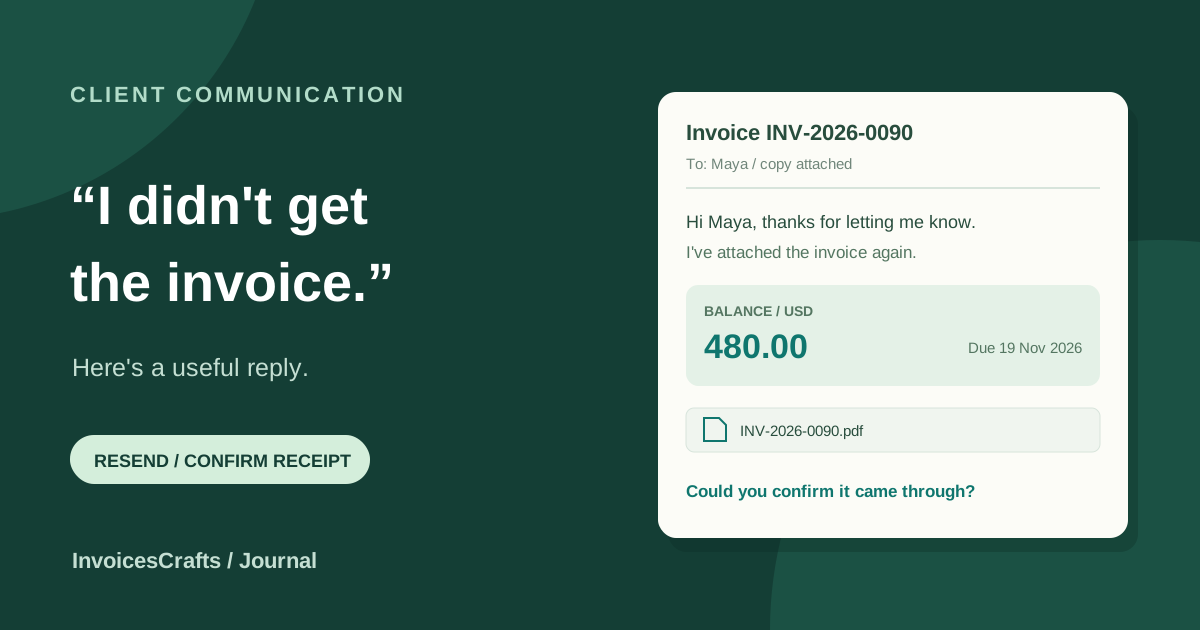
Subject: Invoice INV-2026-0090 — copy attached
Hi Maya, thanks for letting me know. I've attached invoice INV-2026-0090 again for the November website updates. The balance is USD 480, with the agreed due date of 19 November 2026. I originally sent it on 5 November.
Could you confirm the attachment has come through? If your accounts team needs it at a different address or through a supplier portal, please send me the details and I'll submit it there. Thanks, Alex.
Replace the name, reference, work description, amount and dates before using this. The useful parts are the invoice reference, the current balance and a request the client can answer. There's no need to apologize for sending the invoice or add a paragraph about how inconvenient the delay has been.
If they need a portal upload, finish that step
An email to your project contact may not be enough for their accounts team to process the invoice. If they give you a portal or a dedicated billing address, submit it there and check for a confirmation or reference number. Keep that reference beside the invoice in your records.
If the portal rejects the file, read the error before uploading again. A missing PO reference, an attachment requirement or a mismatch in the customer details may need a specific fix. Ask the billing contact about the requirement you can't resolve; repeated uploads of the same rejected file won't tell you what to change.
Leave yourself a useful next step
Once the client confirms receipt, note the date, recipient and any promised update in your invoice register. 'Maya confirmed receipt on 19 November; accounts will update us on 23 November' gives you a clear reason and date for the next follow-up.
If they ask for more time, discuss an actual payment date and record what you agree. Check any existing agreement before changing the terms. A request for a fresh copy doesn't tell you when they expect to pay.
If there's no reply, check for a delivery failure and use an established contact route to confirm who handles invoices. Your next message can be brief: 'Checking that the attached copy of INV-2026-0090 reached the right person. Could you confirm receipt and the expected payment date?'
Before sending any later reminder, look for a recent payment or reply. Nothing makes a follow-up feel more careless than asking someone to pay a balance they've already settled.
Common questions
Should I issue a new invoice if the client didn't receive the first one?
If the invoice is correct, resend the existing document with the same invoice number. If the document needs a correction, follow your correction process and tell the client which copy to use.
Should I mention when I originally sent the invoice?
Yes, if it helps identify the document. State the original sent date briefly and keep the message focused on confirming receipt and the next payment update.
What if the client needs the invoice sent to accounts?
Confirm the billing address or supplier-portal details, submit the invoice through that route and retain any submission reference. Ask for confirmation that the document has reached the team handling it.