InvoicesCrafts
What is a purchase order?
A purchase order records what a buyer intends to purchase, often including the supplier, items or services, quantities, prices, delivery details and a PO number. A buyer may use it to obtain internal approval and give the supplier a reference for the order.
Check the order against the agreed scope and terms before accepting or starting work. If anything is missing or incorrect, contact the buyer and document the agreed correction. Whether and when a PO creates a binding agreement depends on the circumstances and applicable rules.
Purchase order vs invoice: what is the difference?
The buyer normally issues the PO before the goods or services are supplied. It describes the order and its expected cost. The seller issues the invoice at the agreed billing point to identify the charges and ask for payment. A PO is not proof of payment; a receipt or payment record confirms money received.
A PO number is the buyer's reference for an order. An invoice number is the seller's reference for a particular bill. They do not need to match. One PO can cover multiple invoices or deliveries if the buyer's process allows it; ask how partial billing should be handled.
How do purchase orders and invoices work together?
First agree on the scope, price, billing milestones and payment terms. If the customer requires a PO, ask for it before beginning work or delivering goods. Check the supplier name, order details and available amount, then keep the PO with the agreement.
At the agreed billing point, prepare an invoice for the items or milestone being charged. Include your own invoice number and the customer's PO number, and use descriptions the buyer can recognize against the order. Send it through the customer's specified email address or supplier portal.
The buyer may compare the invoice with the PO and a delivery or service record before approving it. Ask for the buyer's requirements in advance, since a missing reference or unmatched amount can delay their review.
Where does the PO number go on an invoice?
Place the PO number in a clearly labeled field such as PO number or Purchase order reference near the invoice number and date. Copy it exactly from the customer's order. Do not use it in place of your own unique invoice number.
If your invoice layout does not have a dedicated field, use a clearly labeled reference or notes area. Check the saved PDF to make sure the reference is visible. Ask the buyer whether each invoice should contain one PO reference and whether any project or supplier identifiers are also needed.
What if the invoice and purchase order do not match?
Compare the line descriptions, quantities, rates, currency and the work or delivery covered. A difference can arise from a changed scope, a partial delivery, tax or shipping treatment, or an error in either document. Do not change an agreed price merely to make two documents appear to match.
Contact the buyer's ordering or accounts-payable contact with the PO and invoice references. Explain the difference and ask whether an updated PO, a corrected invoice or another approval is needed. Follow the agreement and applicable correction rules, and keep the written resolution with your records.
PO and invoice checklist before sending
Use this quick check when a customer has supplied a purchase order.
- Confirm the PO is intended for your business and the agreed order.
- Check descriptions, quantities, rates, currency and the portion being billed.
- Use a unique invoice number and copy the PO number into a separate labeled field.
- Confirm the billing contact, submission method and any required references.
- Review the amount due, due date and payment instructions on the saved invoice.
- Resolve discrepancies with the buyer and retain the supporting records.
Example: one purchase order and two invoices
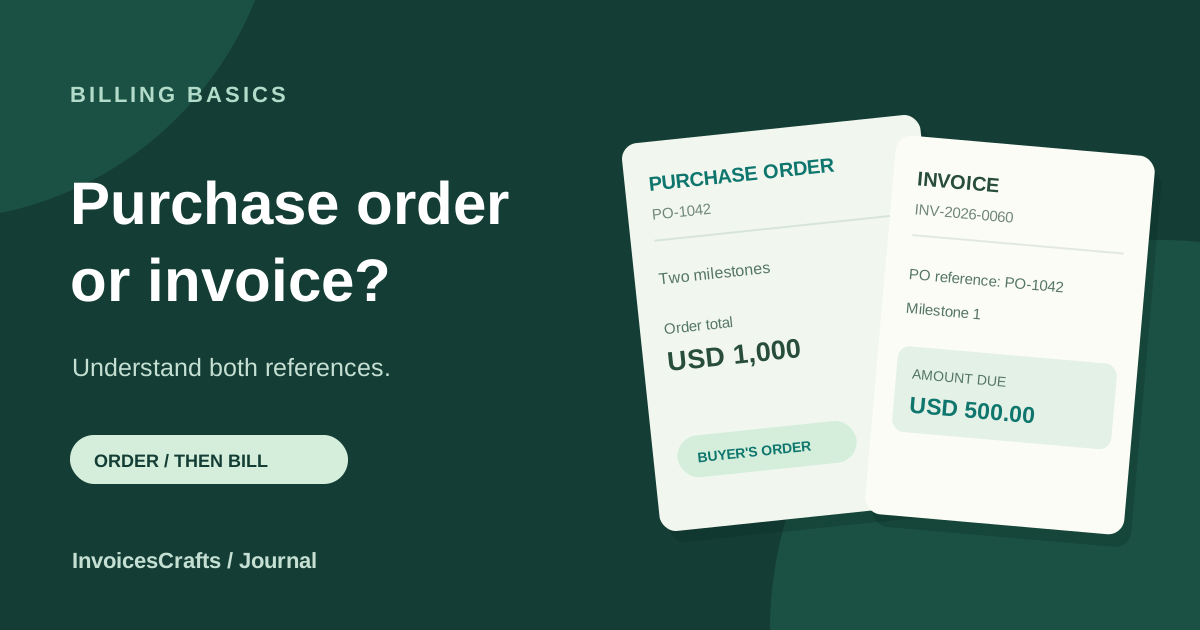
A fictional buyer orders two agreed milestones at USD 500 each. The parties agree to bill each milestone separately; no tax, shipping or other adjustments apply.
- Buyer PO number
- PO-1042
- Order total
- 2 milestones × USD 500 = USD 1,000
- First invoice
- INV-2026-0060; PO-1042; milestone 1; USD 500
- Second invoice
- INV-2026-0061; PO-1042; milestone 2; USD 500
- Total billed against the PO
- USD 500 + USD 500 = USD 1,000
- Payment status
- Check each invoice and payment record separately
Common questions
Is a purchase order the same as an invoice?
No. A buyer usually issues a purchase order to specify an order; a seller issues an invoice to request payment for charges. They serve different purposes and have separate references.
Is a PO number the same as an invoice number?
No. The PO number identifies the buyer's order and the invoice number identifies the seller's bill. Show both separately when the customer provides a PO.
Can one purchase order have multiple invoices?
It can when the buyer's process and agreement allow partial or staged billing. Identify the portion billed on each invoice and check the total against the order.
Can I invoice without a purchase order?
Some customers do not require one, while others need a PO before processing an invoice. Confirm the customer's purchasing and submission requirements before billing.
What should I do if the PO amount is wrong?
Contact the buyer to resolve the difference and document any approved change. Ask whether the order must be updated before you submit the invoice.