InvoicesCrafts
Find out who handles the invoice
Your project contact might be a founder who pays every bill personally. They might also be a designer whose involvement ends when they approve your work. Ask where invoices should go rather than assuming the email address on the project thread is the right one.
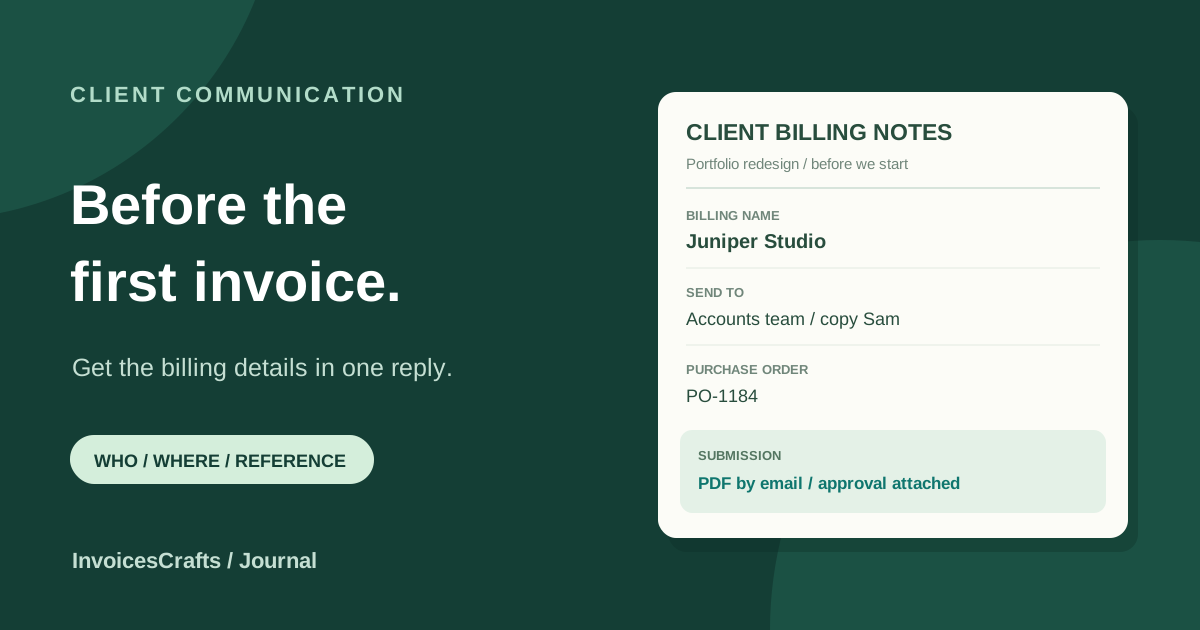
Get the billing contact's name and email address, and ask whether your project contact wants to be copied in. If the company has a shared accounts inbox, save that address with the client record. You'll want it again when you need to check that the invoice arrived.
Confirm the customer's billing name and address, too. A brand name on a website may differ from the business name the client wants on its invoices. Let the client supply those details instead of piecing them together from a footer or an old email signature.
Ask about the PO before the invoice is ready
Some clients need a purchase order reference before their accounts team can process a bill. If that's their process, ask when the PO will be available and who is arranging it. Copy the reference exactly when you prepare the invoice; keep your own invoice number as a separate field.
This is also the time to ask how they accept invoices. Email may be fine. They may need you to register as a supplier, upload a PDF to a portal or attach a timesheet. Ask for the instructions early enough to complete those steps before your planned billing date.
A useful question is, 'Is there anything your accounts team needs on the invoice or alongside it?' That gives the client room to mention a project code, an approval email or a particular attachment without making them work through a long form.
Put the billing point in writing
A project can have a clear price and still leave the billing date vague. If you're invoicing after a milestone, name that milestone. If you bill monthly, confirm the period each invoice covers. For hourly work, find out whether the client wants to review a timesheet before you submit the bill.
Confirm the agreed currency and payment terms in the same conversation. 'At the end of the project' and 'after the final files are approved' can mean different things to the two people reading them. Use the wording you actually agreed, and check how the payment due date will be determined.
If the client's supplier instructions introduce a different billing schedule or payment term, raise the difference before sending the invoice. Keep the written agreement somewhere you can find it when you prepare the bill. An accounts address tells you where to send it; it doesn't settle a disagreement about when it's due.
Keep the email short enough to answer
You don't need to send a questionnaire. Here's a fictional email for a designer getting ready to start a portfolio redesign. It assumes the fee and payment terms have already been agreed.
Subject: Billing details for the portfolio redesign
Hi Sam, before we get started, could you send me the business name and billing address you'd like on the invoice, plus the email address for whoever handles payments? Let me know if you'd like me to copy you in.
Do you need a PO number or project reference, and should I email the PDF or submit it through a portal? If accounts needs any supporting documents, please send me the requirements. I'll invoice at the first milestone we agreed. Thanks, Jo.
Adapt the last sentence to your actual billing arrangement. If the payment terms are still open, resolve them explicitly rather than using this email to imply that they've been settled. You can ask for missing details in a second message; the aim is to make the first reply easy.
Save the reply where you'll look for it
Put the billing name, contact address and submission instructions in your client record. Keep a reference to the email that confirmed the terms and any PO or supplier instructions. Leaving the answer buried halfway through a project thread means doing the same search again at invoice time.
When the first invoice is ready, compare it with that reply. Check the recipient, customer name, reference, billing period and attachments, then open the PDF before submitting it. Save any portal confirmation or sent-email record alongside the invoice.
For later projects, a brief 'Are these still the right billing details?' is enough to start the check again. If your usual contact has left or the company has changed its submission process, you'll find out before the next invoice is waiting in the wrong inbox.
Common questions
What billing details should I ask a new client for?
Ask for the customer's billing name and address, the invoice recipient, any PO or project reference, the submission method and required supporting documents. Confirm the billing schedule, currency and payment terms as part of your agreement.
Should I send the invoice to my project contact or to accounts?
Ask the client which address handles invoices and whether your project contact should be copied in. Use the submission route the client confirms, and keep the contact details with the client record.
What if the client needs a PO number before accepting an invoice?
Ask who will arrange the PO and when it will be available. Check it against the agreed work and include its reference separately from your invoice number when you prepare the bill.